

New Year: New You! Discover Your Path To Wellness
Updated: Jan 13
Mervyn Black sits down with four DB-based wellbeing practitioners to shine a light on different ways to slow down, reconnect and live your best life in 2026. Each expert shares a time-tested approach to nurturing body, mind and spirit

PHOTOGRAPHY BY Andrew Spires
At a time when switching off from technology and the pressures of daily life is becoming increasingly difficult, Discovery Bay offers a range of wellness experiences to help you slow down, rebalance and reconnect. From meditation and forest bathing to aromatherapy and expressive arts therapy, four local practitioners – Sherry Yasay, Amanda Yik, Paula Lepore and Rachelle Conradie – share the methods they use to nurture wellbeing.
SHERRY: MEDITATION

Sherry Yasay, a mindfulness and meditation facilitator, and mindset coach, calls her DB studio “a space to slow down, connect and remember what is truly important.
“For me, wellness is about reconnecting to self, remembering to slow down, prioritising rest and remembering who we are as humans – we’re not machines. Life can be do, do, do but it’s important to take time out just to be in the human experience through the five senses,” opens Sherry.
Sherry works both locally and throughout Hong Kong, drawing on decades of experience in the mindfulness space (www.sherryyasay.com). “The overarching thing for me is connection to self and connection to others,” she says. “Community is a huge thing for me – that’s what motivates me to continue doing what I do.
“With meditation there is this space and silence where you start to become aware of yourself – what you’re feeling, your body, your emotions, your thoughts. When facilitating meditation, I find that people have these insights independently; my role is not to offer anything back but just to sit and listen.” One of Sherry’s specialties, sound healing, uses the soothing tones of Himalayan singing bowls to quiet the mind and guide it into a meditative state. “The mind is meant to continually think – that’s its job, just like the heart is meant to beat. So how sound works is it gives the mind something to do: listen to the sound,” Sherry explains. “There’s a moment where you slip into a deep meditative state: your mind is not fighting for attention, and you float in and out. This allows for relaxation and healing because when you allow the body to rest, the body does what it needs to do to rebalance.”
AMANDA: FOREST BATHING
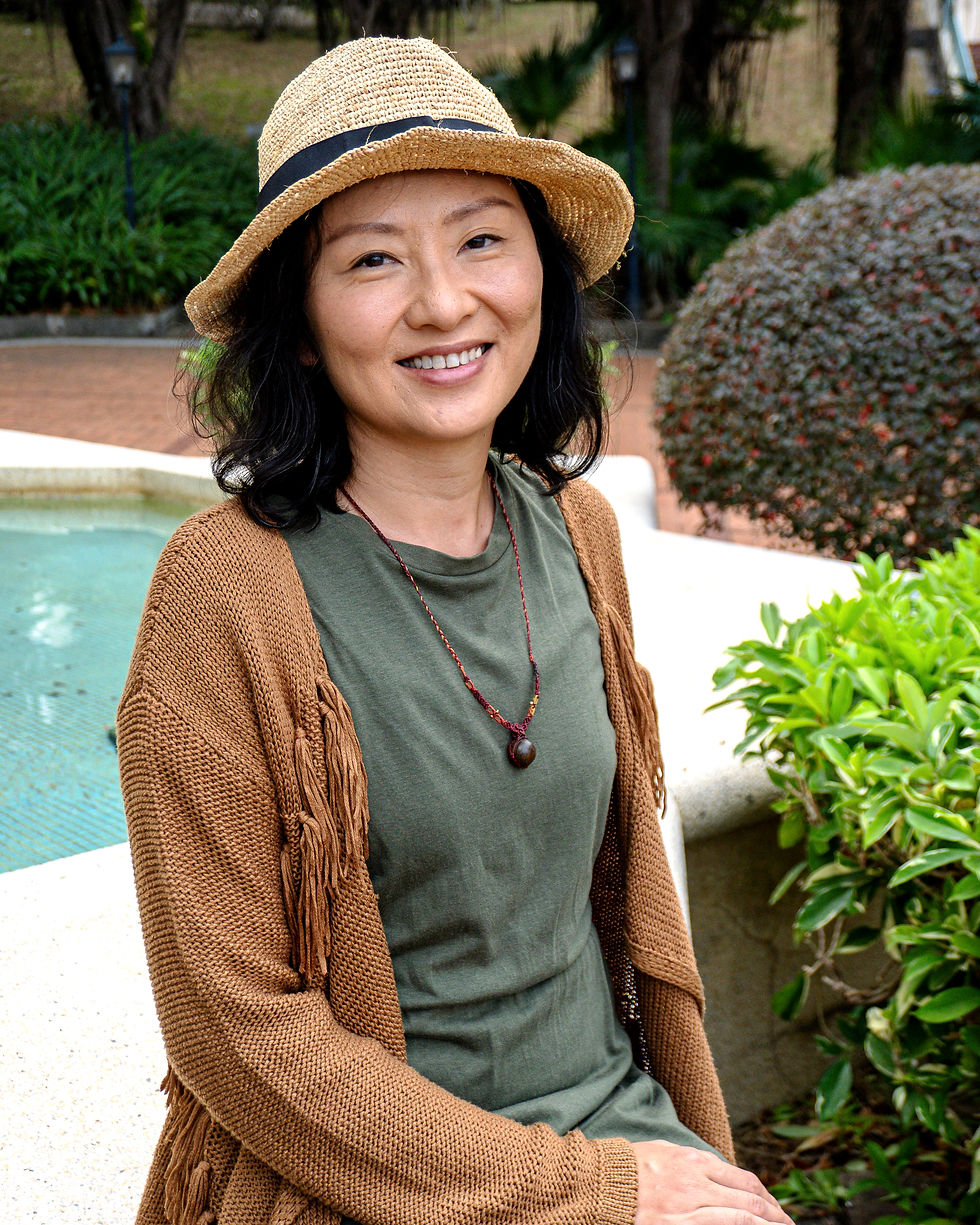
For Amanda Yik, founder of Shinrin Yoku Hong Kong and a certified nature and forest therapy guide (email: amanda@shinrinyokuhk.com), the road to wellness is reconnecting with nature, or more specifically forest bathing.
“It’s really about giving your nervous system a break,” Amanda opens. “I think right now most of us are glued to the screen one way or another: we’re constantly stimulated in a way that is not very conducive to wellbeing. We live in a world where negative news stories dominate, so we are always on high alert and our nervous system is always tense. What we need is a space where we feel safe, connected and restored. For me, that space is in nature – and happily here in DB, that’s all around us.”
While it may sound to some like a glorified way of describing a nature walk, Amanda is quick to point out the benefits of an expert-led experience. “If you go into the hills and just sit there and enjoy the forest, you are forest bathing but when it’s a guided process it’s more therapeutic. We bring a group together and take them on a journey – the aim is for everyone to drop their daily hustle-and-bustle and come into a place of stillness and quietness, where they can reconnect with themselves.”
Amanda references worldwide studies that support the benefits of forest bathing. “Our blood pressure is regulated when we go into nature, our mood is lifted and our stress hormones come down. What’s more, phytoncides, the amazing chemicals trees emit, are proven to have anti-cancer properties and immune-boosting properties.
“Connecting with nature is allowing ourselves to return to who we actually are. Most of us wouldn’t consider ourselves sick or unwell, but we have deviated from how we are meant to live as human beings. Holistic practices, like forest bathing, bring us back to default settings and allow us to reset and achieve balance.”
PAULA: AROMATHERAPY

Paula Lepore is a wellness coach and aromatherapist, currently celebrating 10 years at Young Living Essential Oils (email: hooplaessentials@gmail.com). She describes her route to wellness as a “spiritual walk, based on knowing who God is and an everdeepening relationship with him”.
Paula first got on the path, and into aromatherapy, 12 years ago when her mother was diagnosed with cancer. “I started to explore natural options for healing and as I saw my mother heal through nonconventional treatments, I realised that people always trust the first things their doctors tell them instead of exploring other options.”
The experience led to Paula quitting teaching (science, math, technology and PE). “I felt very passionate about helping people who wanted to actually heal, not just cover up their illness or medicate themselves to get through pain.”
Paula’s journey has seen her study the science behind aromatherapy and she works through a holistic process with her clients. “Usually, they come to me with a specific situation, so we’ll deal with that right away, and then I’ll ask a series of questions that uncover what’s going on with them emotionally,” she says. “Often, those emotions are what’s driving the physical issues.
“I love using essential oils because they work on a physical level, regenerating cell tissues, but they also work on an emotional level. The limbic system is triggered by aroma and it controls your emotions, hormones and metabolism. They call aromatherapy an alternative route but it was never that – if you look back in history, it was always the way we would heal.”
These days, Paula focuses increasingly on the spiritual: “I’ve realised a lot of people are not in tune with themselves and that consequently they feel conflicted inside,” she says. “Until we understand we’re not just physical beings – we’re emotional and spiritual too – we’re never going to feel whole.”
RACHELLE: THE ARTS

Licensed mental health professional Rachelle Conradie blends her lifelong holistic wellness experience with the transformative power of the arts at her private practice, Ar ts for Health (www.rachelleconradie.com). She offers community arts experiences (singing circles, yoga and sounding, gatherings for life transitions and conscious dance) and expressive arts therapy – tailored individual or group therapy sessions for adults and children, supporting sensory regulation, emotional processing, creative expression and digital-life balance.
“The arts were always integral to my family’s way of life,” Rachelle opens. “Arts aren’t just meant for a talented few; creating is a way of being and expressing ourselves. Living creatively, we invite aliveness and connection into a more holistic, conscious way of life.”
Rachelle’s passion is palpable when she espouses the profound therapeutic impact of arts creating: “Arts engagement activates more neurological pathways than talking alone to foster new perspectives to find solutions. Clients often find insight and deeper ease after creating or moving together. Evolutionarily, movement, singing and mark-making precede language, explaining why non-verbal creation deeply impacts our sense of belonging.
“One of my main motivations is to highlight creativity as a mental health necessity, not just a ‘nice-to-have’. It’s a really vital component of who we are, how we express ourselves and how we create connection – not only to each other, but also to the natural world and to the mystery of life.
“In community arts we embrace art like our ancestors did in their daily lives, singing, dancing, creating together – not for performance, commerce or perfecting technique but for connection with community and our environment. Arts therapy provides a safe space where we can develop capacity for uncertainty, process emotions, regulate nervous systems and welcome vitality, playfulness and beauty. Magic happens when we co-create; our nervous systems co-regulate, moving us beyond our normal way of thinking into a place of deeper wisdom.”


