

Focus On Vanuatu
Harvey Law Group delves into Vanuatu's Dual-Track Citizenship By Investment Program and reveals how it can lead to a second passport in just two months

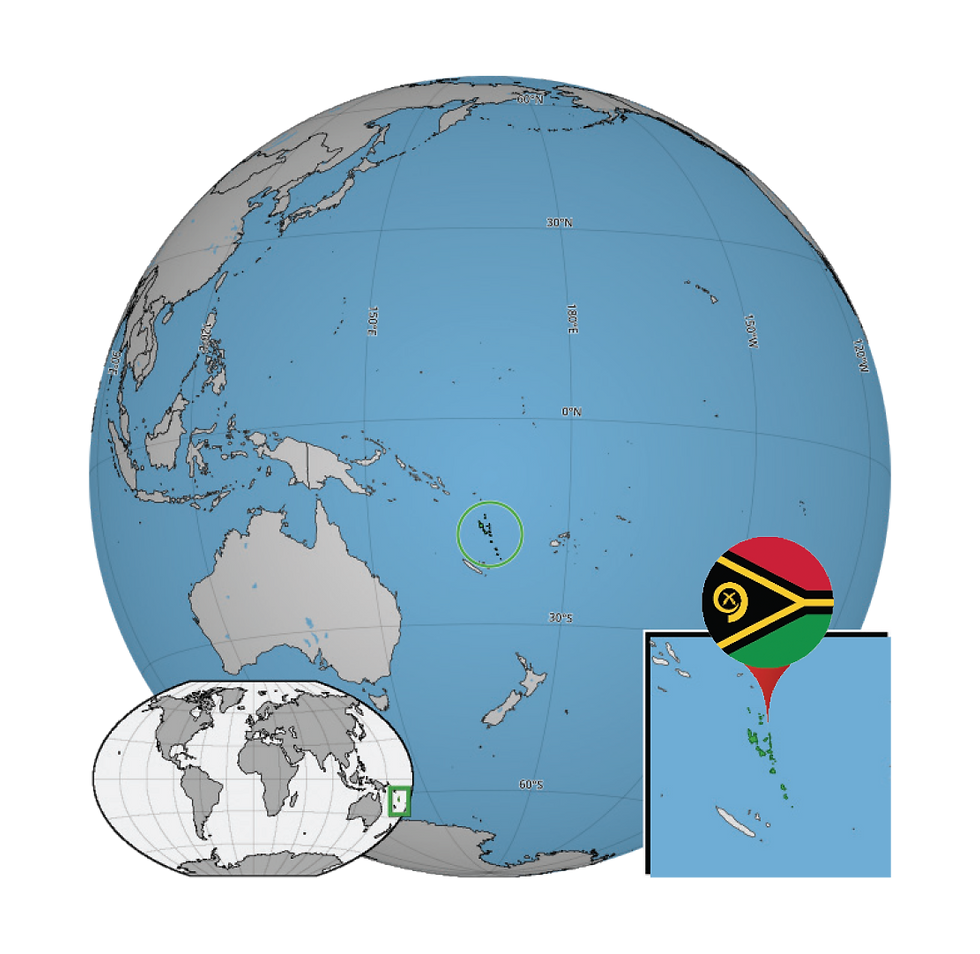
Vanuatu, an island nation in the South Pacific, operates one of the world’s fastest and most straightforward citizenship by investment (CBI) programs, offering a path to a second passport primarily through two channels: the Development Support Program (DSP) and, more recently, the Capital Investment Immigration Plan (CIIP). The program is grounded in the country’s Citizenship Act and related regulations, which authorise the government to grant citizenship in return for qualifying financial contributions to national development.
For globally mobile investors, these options offer visa-free access to many countries, a tax-friendly environment, and a relatively quick processing timeline compared with many competing programs. While both DSP and CIIP ultimately lead to the same status of Vanuatu citizenship, they differ in structure, cost composition, and risk/return profile, which makes it essential to understand the nuances before choosing a route.
DEVELOPMENT SUPPORT PROGRAM
The Development Support Program is the primary and most established track within Vanuatu’s CBI framework. DSP is a donation-based option: investors make a non-refundable contribution to the government, which is then used to support infrastructure and other development priorities across the country.
DSP remains one of the lowest-priced full citizenship options available globally. For illustration, minimum contribution levels under DSP are US$130,000 for a single applicant and US$180,000 for a family of four.
The DSP process is also known for its speed and procedural clarity. Applicants first submit basic documents and pay a due diligence fee; if the precheck is successful, they receive an Approval in Principle from the Vanuatu Citizenship Commission within a matter of weeks. After final payment of the full donation, the authorities issue the citizenship certificate and passports, with total processing commonly quoted in the range of 45 to 60 days or roughly two to three months from start to finish.
From a governance and predictability standpoint, DSP is seen as the ‘core’ state-managed programme. The government and Citizenship Commission directly oversee due diligence, approval and issuance of citizenship, which results in stable rules, clear timelines and less dependence on commercial project performance. This structure appeals to investors who prioritise certainty and simplicity over potential financial upside.
CAPITAL INVESTMENT IMMIGRATION PLAN
The Capital Investment Immigration Plan emerged as a complementary route that combines an element of donation with a defined investment component. Instead of purely donating the entire amount as per DSP, CIIP allocates a portion into a specific fund or project designated by the government, with the remainder treated as a nonrefundable contribution.
A typical recent CIIP structure involves a contribution of about US$157,000 for a family of four. In this model, US$50,000 of this amount is invested into a fund such as the CNO Future Fund, a Vanuatu-based investment fund focusing on Vanuatu’s sustainable development objectives. Specifically, the CNO Future Fund aims to target investment into the coconut oil industry in aid of Vanuatu’s commitment to 100% renewable electricity generation. The CI IP structure is particularly advantageous as it includes a contractual commitment to return that US$50,000 to the investor after a holding period of five years.
CIIP is thus positioned as a ‘donation plus investment’ route that reduces the net long-term cost of citizenship. As a result, CIIP is one of the most cost-effective, family-sized CBI options globally when considered over a multi-year horizon.
PRACTICAL CONSIDERATIONS FOR APPLICANTS
Both DSP and CIIP grant the same end result: Vanuatu citizenship with an associated passport, offering visa-free or visa-on-arrival access to a substantial number of countries and territories, plus access to Vanuatu’s tax-friendly regime.
Applicants must pass due diligence checks under both options, including background screening and source-of-funds verification, and both follow broadly similar steps: initial eligibility check, document submission, approval, full payment, oath (often administered remotely) and issuance of the citizenship certificate and passport.
When selecting between DSP and CIIP, prospective applicants should evaluate several practical factors. First, budget and family size: for a single applicant, the DSP donation may compare favourably given its relatively low entry level and streamlined process, whereas for a family of three or four, CIIP’s partially refundable structure may lower the effective long-term cost if the investment is repaid as planned.
Investors should carefully check the current operational status of each route, as authorities can amend, suspend, or relaunch specific program tracks in response to regulatory reviews, international pressure, or domestic policy needs.
For individuals unsure of where to start or which program to go for, professional legal guidance is invaluable. Harvey Law Group, with over 30 years of experience in global residency and citizenship programs, is here to assist you in confirming your eligibility, preparing the necessary paperwork and guiding you through each step toward obtaining Vanuatu citizenship. Please contact us for advice.


